

Maybe, at work.
01. We keep reaching more families. Why aren't we building deeper relationships?
Strategic partnership
LEARNING × COMMUNITY × OPERATIONS × NARRATIVE
An education organization wanted to engage families more meaningfully as partners in advocacy and systems change.
Exploration
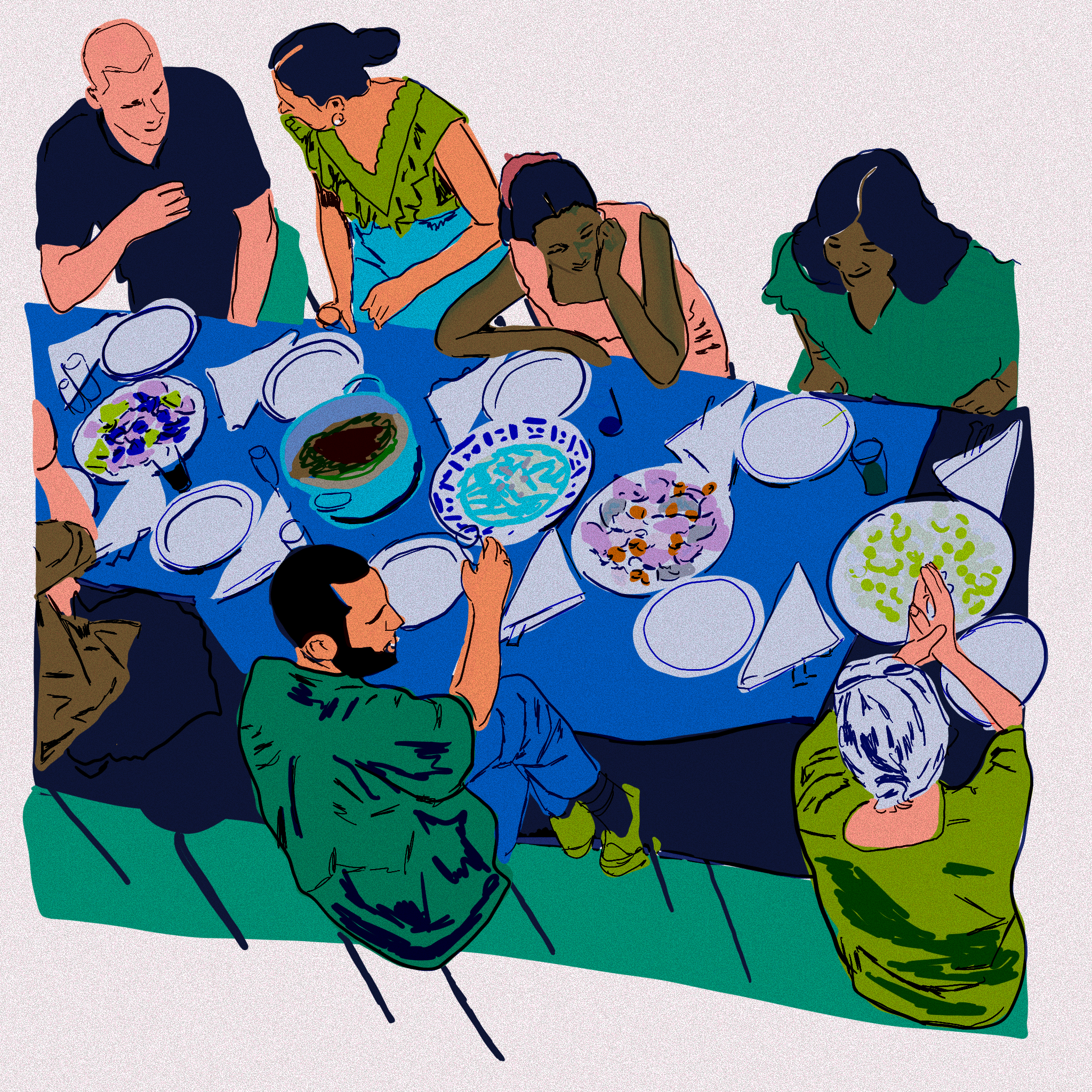
Research with families revealed that many were already at capacity advocating for their own children. Moving from individual advocacy to advocating for all children required more than another invitation to participate. Families needed opportunities to learn and build advocacy skills, but they also needed a community to connect, learn and build with.
Those insights led families and the organization to co-create a family leadership summit, designed to minimize barriers to participation while creating space for learning, relationship building and collective advocacy. But the goal wasn't to engage families differently for one event. The policies and workflows developed for the summit became a starting point for changing how the organization engaged families more broadly, building family partnership into its ongoing operations rather than leaving it dependent on a single event or staff member.
Better questions
What do families need to move from advocating for their own child to leading alongside others?
What would have to change inside the organization to make that partnership possible beyond a single event?
What we did
Partnered with families to research barriers and co-create the summit, then translated what we learned into event design, outreach, funding strategy and organization-wide policies and workflows for ongoing family partnership.
Outcome
A question about deeper family engagement led to more than a new event. The summit became a testing ground for a more sustainable way of working with families, creating an infrastructure built to embed learnings into the organization's ongoing work.
02. We have great training. How do we grow its reach, revenue and impact?
Project deliverable
LEARNING × COMMUNITY × NARRATIVE × OPERATIONS
A 100-person education organization wanted to scale professional training to grow earned revenue while increasing its impact on the early childhood workforce.

Exploration
Research and user journey mapping revealed that the average learner had at least one of the following primary goals:
Meet a compliance requirement
Enter the field
Solve an immediate problem
Advance their career
Train a team.
Understanding these goals allowed for the team to generate increased revenues by creating more value for learners over time.
That insight shifted the strategy from selling individual courses to supporting learners to achieve specific outcomes. Learning pathways, outreach, messaging, registration, technology, measurement, and operations were redesigned with those learner goals in mind. All organizational functions oriented towards a shared north star.
Better questions
Where are learners trying to go, not just what course do they need today?
How could creating more value for learners over time create more value for the organization too?
What we did
Mapped user journeys across key learner and buyer segments, then used them to shape learning pathways, audience strategy, messaging, registration and user experience, delivery, measurement and supporting workflows.
Outcome
A catalog of individual trainings became the foundation for a connected learner ecosystem designed to grow reach, repeat participation and earned revenue. Revenue became partly a consequence of creating a relationship worth continuing
03. How do we make our values show up in how the business actually works?
Strategic partnership
CULTURE × OPERATIONS × DECISION MAKING × NARRATIVE
A founder-led, values-driven restaurant wanted its commitments to community, dignity and care to shape how the business actually operated.
Exploration
Internal processes were rewritten to better reflect the organization's values, influencing decisions at every level. Shared practices informed by those values and developed collaboratively made decisions easier to repeat and delegate with greater autonomy.
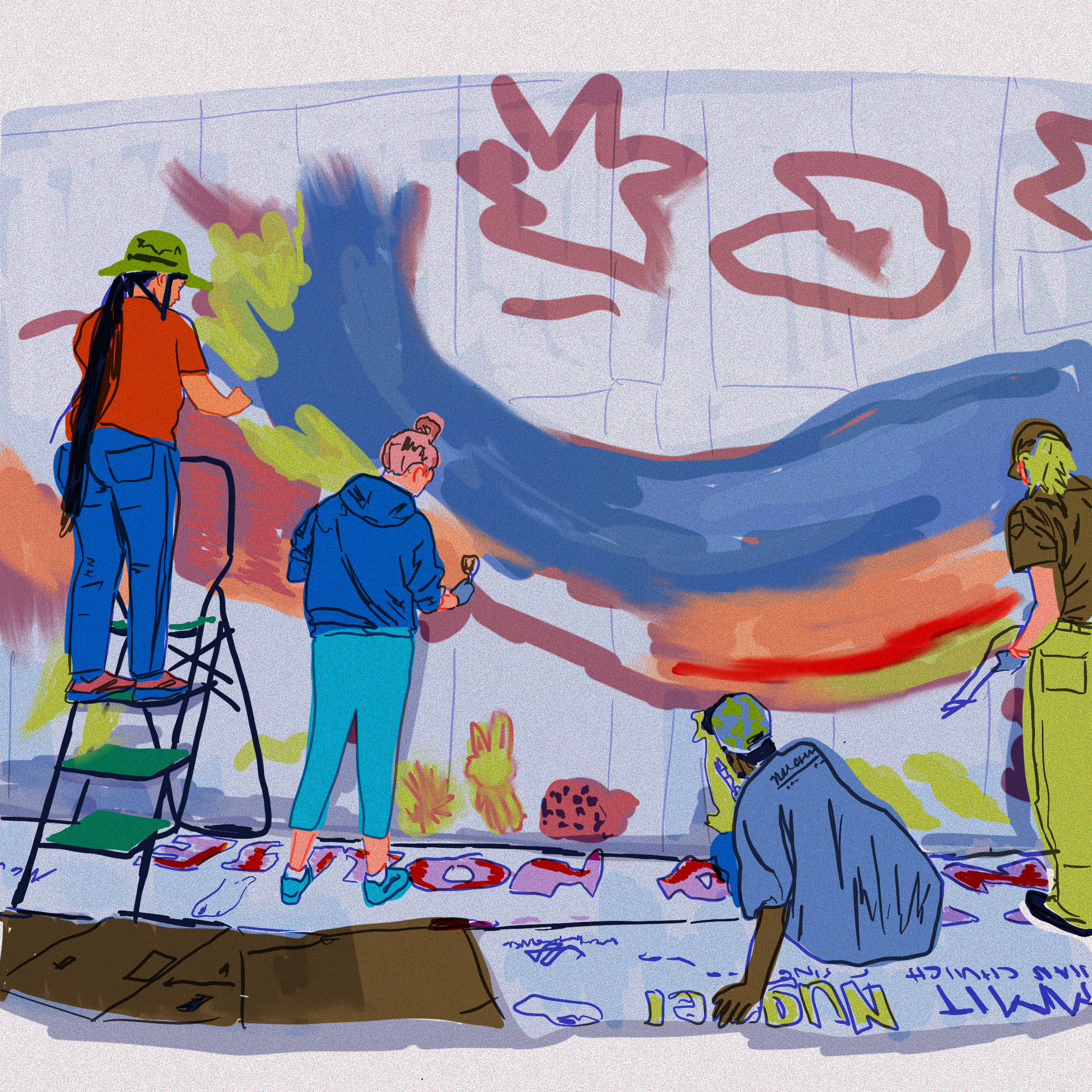
When the organization decided to commission a mural, guidelines around vendor selection and listening to community wisdom shaped decisions about the artist, the process and the final work. As a result, the mural reflected the organization's values, strengthened community buy-in and drove business. The operational work solved an internal need while creating new opportunities for narrative and community connection.
Better questions
Where could one choice create value in more than one place?
What needs to be shared so people can make good decisions without always asking the founder?
What we did
Facilitated shared values and decision criteria, then built them into operational practices, vendor selection, delegation, branding and community-informed narrative strategy.
Outcome
Shared language and systems reduced risk and founder dependence while giving the team more autonomy to put the social mission into practice across the business.
04. How do we grow without one person holding everything together?
Project deliverable → Fractional partnership
OPERATIONS × CULTURE × TRUST × DECISION MAKING
A group therapy practice brought together excellent therapists with different ideas about what good operations should look like. They had spent significant time negotiating shared processes, but finalizing and putting decisions into practice was difficult when everyone's primary focus was being a good therapist.

Exploration
What looked like a need for better processes was also a question of how independent practitioners could share responsibility without sacrificing autonomy. Decisions about scheduling, technology, hiring and logistics repeatedly surfaced different assumptions about authority, responsibility and what practitioners owed one another.
Establishing shared norms first made it possible to collaboratively turn those agreements into systems everyone could use, allowing operational responsibility to be distributed instead of defaulting to one person.
Better questions
What actually needs to be standardized?
What shared agreements would make greater autonomy possible?
What we did
Facilitated shared norms and values, then collaboratively built workflows, training and decision practices across scheduling, technology, logistics, hiring and shared operations.
Outcome
Shared infrastructure reduced dependence on any one practitioner and freed the team to focus more of its time on clients and growth. Greater consistency improved the client experience, while increased capacity contributed to higher revenue and allowed the initial project to evolve into an ongoing fractional partnership.
Illustrations: Caché Velásquez (2026)